
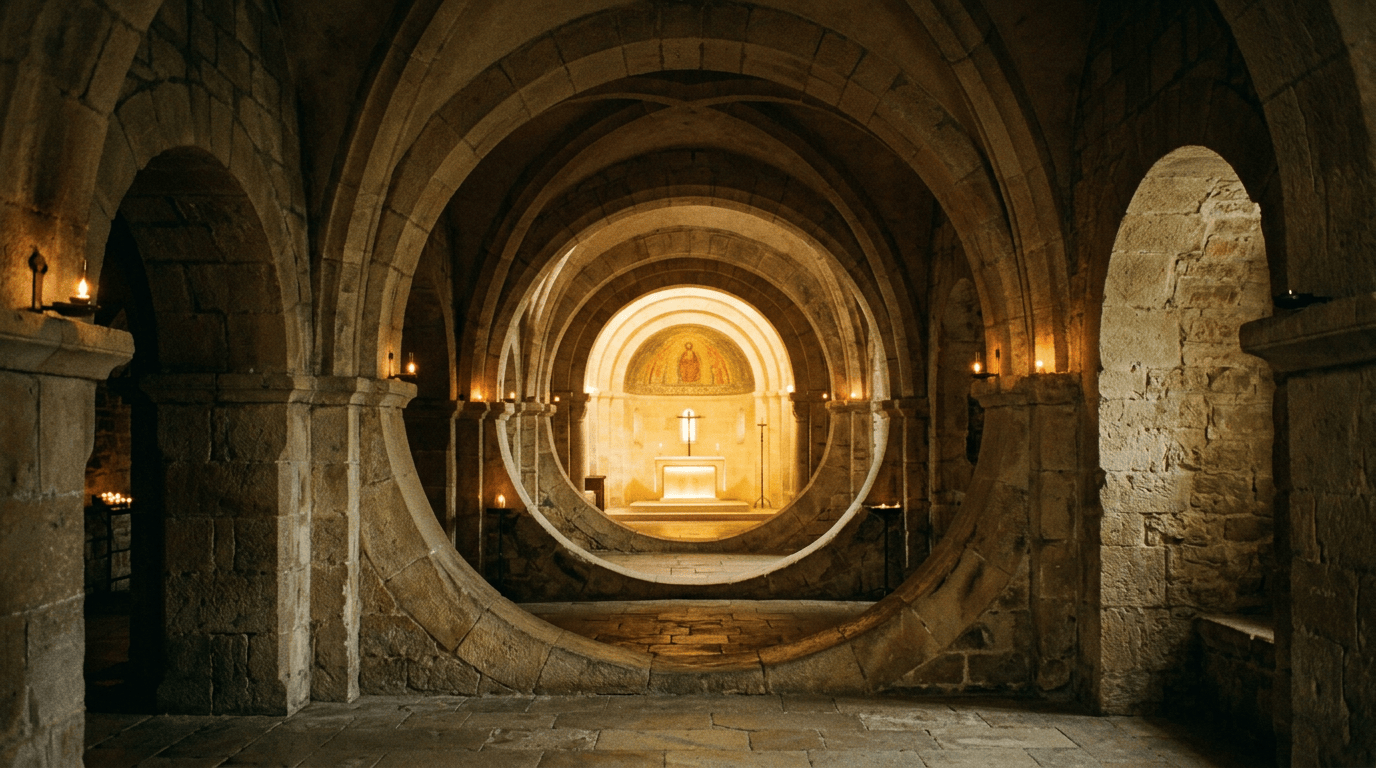
Treading the Chambers with St Teresa of Avila

So we start mumbling prayers like hopeless sinners,
attacked by serpents, the demonic spinners
of lustful lies, yes snakes and frogs our doom
plot tirelessly. Hardly is this a room,
out by the moat, sucking the earthly air.
The godly soon succeeds to better prayer,
inclining to the meditative mind,
leaving man’s baser tendencies behind;
but must strive forward, persevering, for
here will the snakes intensify the war,
if soul is lax and longs for worldly treats
or for lust bred beneath corrupted sheets.

And then the soul is driven by a stronger
desire to love, to be with heaven longer
and longer, with a truer, truer love,
and so entreats with groans the Sacred Dove,
hoping for some advancement to high zones
of prayer experienced by the humblest nuns.

And, finally, after waiting long and long,
in deepest hush the soul is sent among,
flooded with comely quiet, touching soul
and spirit, seemingly near the God goal.
It cannot be achieved by any effort,
but purely is a gift, supernal comfort;
but afterward comes desolation rough,
the big brutality of serious love
begins, doubt’s claws stretch scratching, causing grief
and gutting hope, and usually not brief.

But after treading barren soil in question
of love and self, will love find an expression,
at least it will be thought love learns itself,
for it’ll emerge as if from futile filth,
a creature beautiful, shining with splendour,
the soul then truly heavenly contender,
absorbed in God but not completely finished,
the self now having lovingly diminished.

But greater yet degrees of love await,
the soul exploring an ecstatic state,
conforming union, marvellous, mystical
but humble part let still be integral
as body with soul floats in radiance
while there’s experienced inward brilliance.

Then a return to catastrophic waste,
and all that joy, perhaps but lovers’ haste,
for one must learn the suffering of a saint.
The best are bitten, bruised, without complaint.
The soul dreads drifting into vanished faith,
is weary like a shadow or man’s wraith.
But still there’s prayer, and prayer, and prayer, yet still;
and that strong soul is led to do His will.
Rising from the disintegrated dust
then, there’s one final stage to be discussed,
achieved with only cool determination,
the long hours given to God’s contemplation
aflow, awash, inside the soul; and God
has guided soul above the mist, muck, mud
that weigh upon a man; the soul enjoys
a peace that nothing savagely destroys.
Transforming union, signifying love
is well now, settled with the King above.


On Rembrandts’ the Storm on the Sea of Galilee

1
Pregnant with havoc, waves distort the sea,
the furious temper of storm, stripping nerve,
butchering the bosom of man’s bravery;
with violence the ship shakes, threatening to swerve
beyond control. Who has strength, faithfully,
as, crammed with chaos, the waves almost curve
over the wet deck, raging ruthlessly;
to reckon with the hour, and steely serve?
Ah men aren’t made of muster when the hour
reaches beyond the pain of mortal power.

2
Now mayhem over men with peril bends;
and as that ship shakes, shattering men’s resolve,
the crew with rough roused waves could not contend,
alarm to panic trembling cold evolves,
and every man his prayers upward sends,
fear like a sin (thank God that He absolves!),
the tottering ship with human terror blends;
in instant illness courage, crushed, dissolves.
They stir the Lord awake and say, ‘we perish!’
and then, behold, He makes the tempest vanish.

3
And all aboard in fear and wonder question
who could this be, able to rest the storm?
And in the air abides divine suggestion.
However the disciples don’t dare form
that which to ask if true is the impression
of Him they have. But surely deeds inform
us, for in words reserved there is expression;
and as their questions hectically swarm
within their hearts like a turmoil of colours
both flesh and soul like faith’s discovery shudders.


The Four Horsemen

The sound of hoofs across the earth now stamps
and terror fresh upon all regions ramps;
from deadly bounds they ride with mustered rage
to bring an end to this defiant age;
astride a white steed Conquest aims his bow
as in his eyes a furious fire does glow,
unleashing darts that terrify the land,
causing civilisations to disband;
a crown upon his head does indicate
that he is here for Christ to vindicate.
Next, and atop a sorrel horse, is War
who has come for destruction to ensure,
he wields a fuming sword, annihilating peace;
barbarity without a cried for cease
amuck runs on the disconcerted earth,
and savageness does scream in bloody birth
renewed within the lands of mortal men,
a violence far too vile to limn with pen.
Then rides forth Famine on a sable steed
while earth in agony does shake and bleed,
crying aloud that grain be ten times priced,
for such the judgement of the righteous Christ
that bread devouring man ought learn the pain
of body lacking bulk and belly-gain;
for scarcity deserved shall reign on earth,
disrupting humankind’s too laughing mirth.
And, finally, Death rides on a pale horse
to execute rank Hades hungry force,
he curses all the world with pestilence
and ravages apparent innocence,
inflicting deathly stink in every city
without a sliver of forgiving pity.
All four with power to terrorise the world
with pandemonium mercilessly hurled.
They ride together, banded for earth’s doom,
and it shall weep like mourners at a tomb.
Biography:
John S A Watts studied English Literature at Kingston University, he lives in West
Sussex in the UK. He has had poetry published by various outlets including
Westward Quarterly, Fore Shadow, Sparks of Calliope, Down in the Dirt (scarstv),
Time of Singing, Word of Lamb Magazine, and Spirit Fire Review.
Discover more from PAROUSIA Magazine
Subscribe to get the latest posts sent to your email.


